02 · Pure sequence 02 · Impure sequence 03 · Strategy desk 04 · Hand reading 05 · Play safe
Edition · weekly

Drop policy vs lobby rule: a 13-card rummy read with UPI withdrawal timing

13-card Indian Points · sequences · jokers Adult readers · 18+
01 · Rules primer
From the editor

Slots Studio is a quiet editorial desk for adults who play rummy and similar skill-games for stakes they control. We read the rulebooks, run the formats against each other, log real platform friction, and write what we would want to read before sitting down to a serious hand. We do not chase jackpots, advertise winnings we cannot prove, or promise returns on stake.

Use the route above to enter by question, or keep scrolling. The first chapter is the rules primer you wish existed the first time you drew thirteen cards.

Rules · 13-card primer

Start with the rules you wish someone had explained first

The rules of thirteen-card rummy are short. The ways you can lose a hand for not knowing them are not. Below is what we teach new readers to memorise before anything else.

  • Pure sequence first. A valid declaration needs at least one pure sequence - same suit, no joker, no breaks.
  • One impure sequence buys you time. You can stay in the hand with one impure sequence plus the pure.
  • Drop points differ. First drop, middle drop and full miss carry different point costs across platforms.
  • Jokers are wild and printed. The game announces a printed joker per deal; that card and its rank become wild.
  • Declaration wins, not knocking. You win by laying down a valid hand and pressing declare before your turn ends.

Read the full primer

A player's hand of thirteen printed cards laid face-up on a dark wooden surface during a quiet game
Pure versus impure

Two sequences with different jobs

Both belong in a declaring hand. They are not interchangeable. A clean pure sequence saves a hand ruined by a bad deal; an impure sequence buys you a turn or two.

Pure sequence

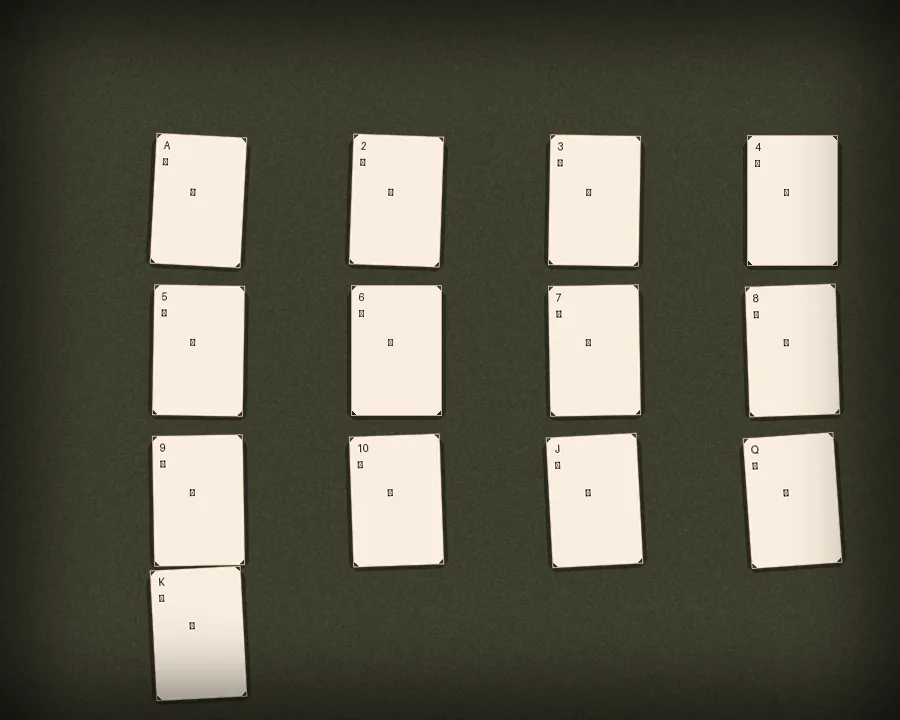
Three or more cards of the same suit, in consecutive rank, with no joker and no printed wild. Mandatory in a declaration. Form it before you consider anything else.

Impure sequence

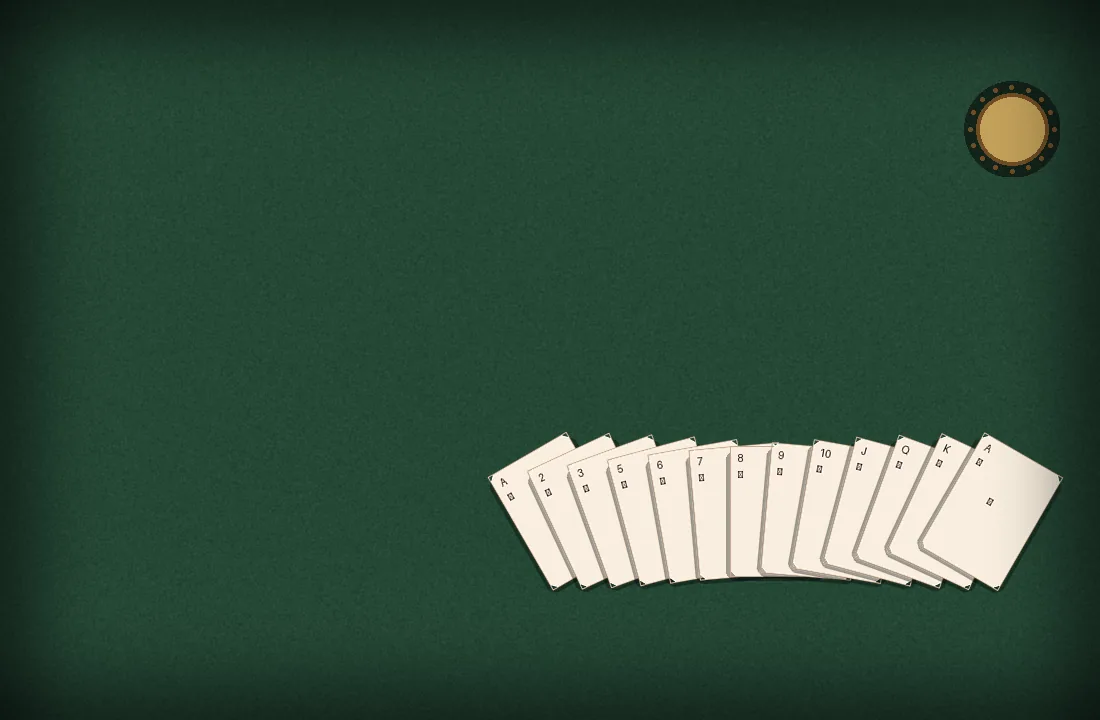
Three or more cards forming a run, with a joker or a printed wild replacing a missing rank. Useful filler for the middle of a hand, never the spine of one.

Reading hands

Four hands, four plans

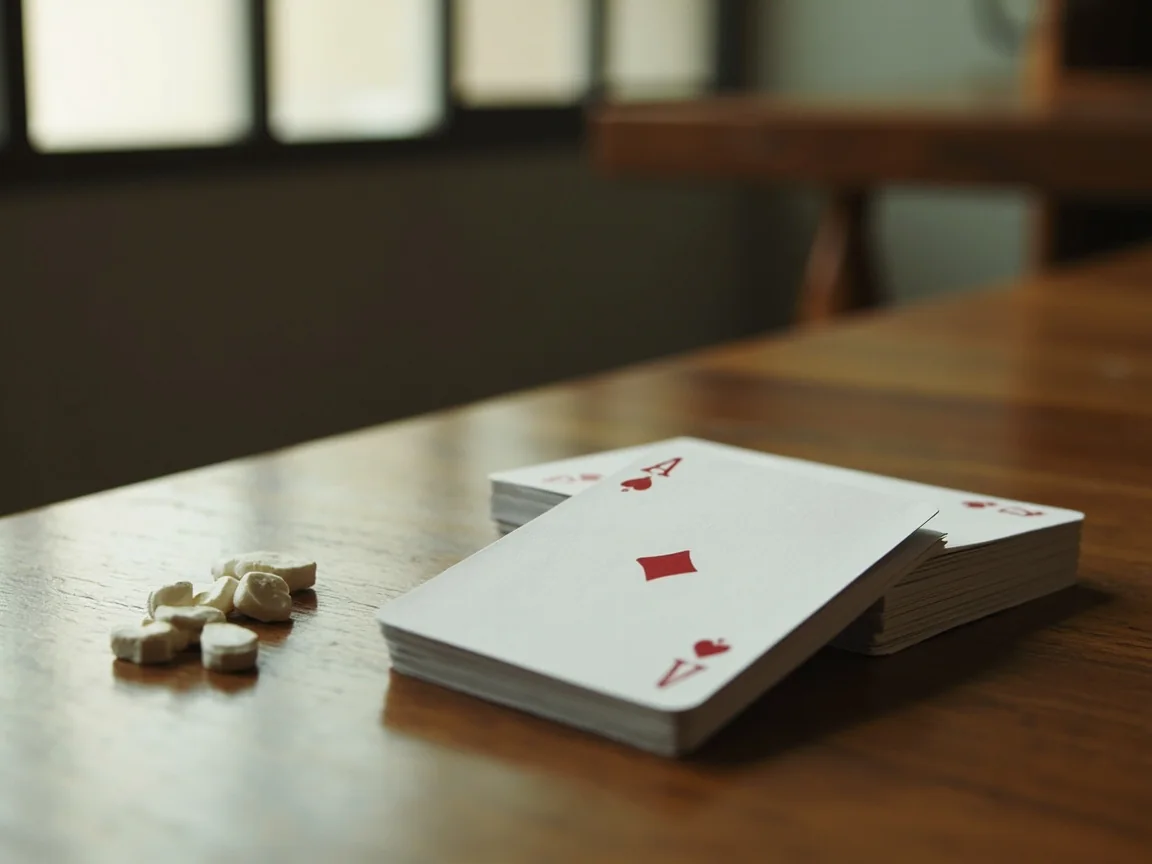
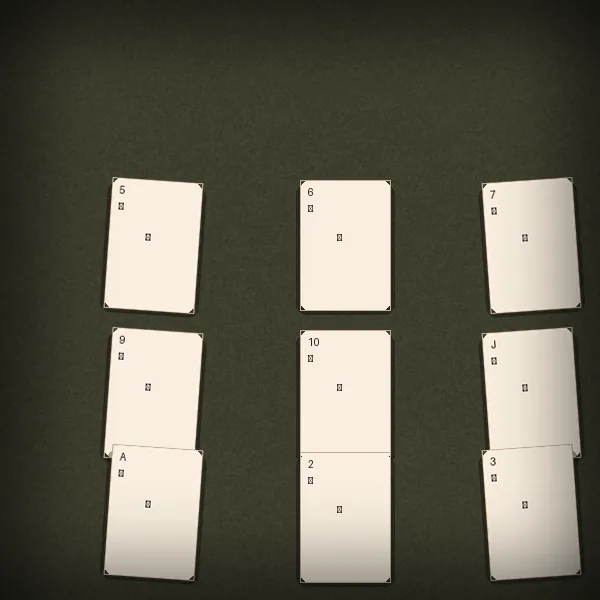
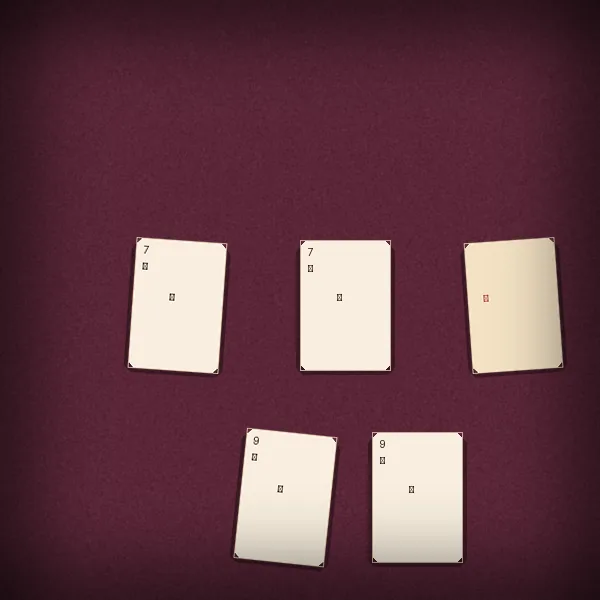
What a hand is asking you to do shows up in the cards, not in your gut. Below are four concrete patterns we walk new readers through.

Formats

The three formats that dominate real-money lobbies

Most platforms offer only these three shapes. Knowing how each one changes the value of a card is the difference between dropping on time and burning a stack.

Standard

13-card Points

Two players or more · fixed points · single deal

Each card carries a face-value cost; the loser pays the winner the count of unmatched cards plus middle-drop penalties.

  • Best for short sessions and quick learning
  • Drop logic is straightforward
  • Variance is high over a small number of hands
Tournament

13-card Deals

Three fixed deals · cumulative score

A player plays a fixed number of deals with one opponent and the loser after each deal picks up the points. Best-of three lives.

  • Strong for measuring decision quality
  • Discipline matters more than in points
  • Useful for second-screen comparison play
Pool

Pool Rummy

101 or 201 · elimination scoring

Players pay an entry, points accumulate per hand, and the table knocks out anyone who crosses the pool ceiling.

  • Slow, long sessions
  • Drop policy is the survival lever
  • Lower-variance per hand than points
Strategy

A decision note on what to discard in the first six turns

Most beginners discard high-value single cards early because they "feel expensive". High cards are not the threat - high cards you cannot sequence are. The point of a discard is to keep your options without paying through the nose when you finally drop.

The cheapest discard is the card you know you will not use and which closes no opponent's run. The most expensive is the card that finishes a sequence your neighbour has been quietly building.

Three discard heuristics

From a thousand logged sessions, three rules survive as useful. None of them guarantees a win. All three reduce the variance of your point end-of-hand.

Discard high singletons when two sequences are open. Once you have at least one pure and a path to a second, the high single is dead weight; let it go.

Hold jokers through the first joker-rotation. The printed joker is announced before the deal; holding it until the mid-game lets you redirect a dying hand.

Drop earlier than feels right. Drop thresholds across platforms are calibrated to reward survival across many hands, not heroics in one.
Platform reviews

What we look at before we publish a platform review

A platform is not a card. We log a few hands, time the cashier, check the rules that map to the practice, and only then publish. Below is the working shelf.

Slots Studio bench notes · 01

Updated weekly · rules & cashier

What slots-class platforms expose about their thirteen-card rooms and how the rules written in the lobby line up with the rules printed in the help centre.

Cashier test · UPI & netbanking

Average of three deposits and three withdrawals

How long a typical UPI deposit takes to land at the table, and how long a typical netbanking withdrawal takes to clear from the cashier.

Drop-policy comparison

Across thirteen-card rooms

Side-by-side: first drop, middle drop and full miss penalties across the thirteen-card rooms the Slots Studio desk has logged this season.

Mobile lobby review notes

Android & iOS captures

What we found on each platform's mobile lobby: table filters, time-to-seat, and the small UI choices that change how a quick hand feels.

Open the review shelf

Chapters
6
Hands logged
1,000+
Platforms
12
Briefings
Weekly
Payments · a working ledger

How long a deposit and a withdrawal actually takes

Compiled from session logs across the platforms currently on the Slots Studio review shelf. The number is a median of three attempts each; minimum and maximum reflect the slowest single attempt we recorded.

MethodDeposit medianDeposit rangeWithdrawal medianWithdrawal range
UPI45 sec15s - 2m4 h1 h - 22 h
Netbanking2 m1 m - 6 m14 h4 h - 36 h
Card (debit)3 m1 m - 8 m24 h12 h - 3 d
Card (credit)3 m1 m - 8 m2 d1 d - 5 d
Wallet (in-app)Instantinstant30 m10 m - 3 h

Time varies by bank, by KYC state and by platform risk review. The ledger is updated whenever the Slots Studio desk logs three or more new attempts.

Open the safety ledger

Community questions

Questions readers keep sending in

Short, sourced answers to the questions we receive most often. Each answer links out to the longer chapter where the answer was developed.

What is the safest way to start a real-money rummy session?

Set a session budget before the first hand and pick a stake size that costs you less than one-tenth of that budget per hand. Decide the drop threshold in advance: usually two consecutive bad deals. Our strategy desk walks through the drop math for each format.

Are printed jokers really wild?

Yes, but only the printed joker announced before the deal. The wild card for the deal is that card's rank across all four suits. A few platforms substitute a card from the deck if no printed joker is dealt; check the lobby rule strip.

How long does a UPI withdrawal really take?

From the platforms on the Slots Studio shelf, the median is around four hours. The fastest we have logged was one hour; the slowest about twenty-two hours. KYC delays and weekend bank queues explain most of the outliers. Our payments ledger keeps the current numbers.

Is thirteen-card rummy a skill-game or a gamble?

In India, courts have repeatedly treated thirteen-card rummy as a skill-based game, not as wagering. Several states still restrict access. Our legality explainer lists the regional detail we have been able to confirm.

What is the difference between Slots Studio and a casino review site?

We are an editorial desk. We do not run real-money tables and we do not earn commission on stakes. We do earn a referral fee when a reader signs up to a reviewed platform through the Play now button, which is what funds the desk. Our ownership note describes the structure in full.

Latest briefings

Dated, sourced, signed by the editor who wrote them. Briefings are short; the long reads live inside the chapters.

Play safe

If the stakes stop being small, please reach out

The Slots Studio desk is editorial. We cannot help with personal finance or gambling-related support. The services below are independent, free to call and open around the clock.

  • National helpline for gambling-related concerns · 1800-XXX-XXXX
  • iCall counsellor chat · weekdays 10:00 - 20:00 IST
  • Vandrevala Foundation crisis line · 1860-2662-345 · 24/7
  • AstroAmeya help-line (peer support) · check the latest number on their site

Slots Studio does not run real-money tables and we do not earn on losses. The numbers above are listed because every reader should have them within reach.

About this publication. Slots Studio is an editorial desk run by a small group of adult readers who play rummy and similar skill-games for stakes they control. We do not run tables, take deposits or issue bonus codes. We earn a referral fee when a reader signs up to a reviewed platform through the Play now button - that fee is what funds the desk. We keep the rulebook, the cashier timings and the drop policies honest because if we do not, there is no reason to keep reading.

Who runs Slots Studio · Customer care · Responsible play · Legality